
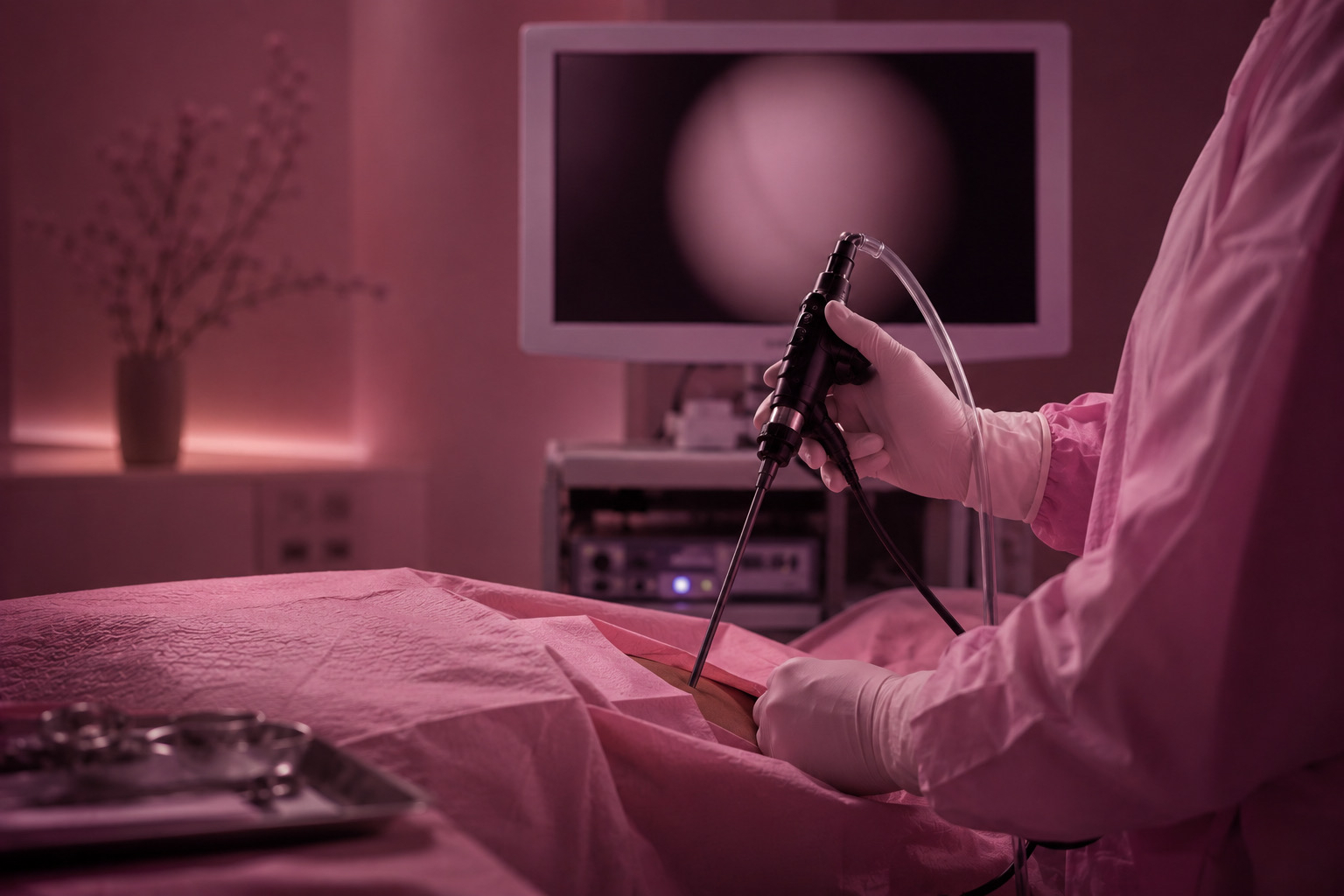
At Fertilysis, we offer advanced Diagnostic and Operative Hysteroscopy to accurately evaluate and treat conditions affecting fertility, implantation, recurrent pregnancy loss, and overall uterine health. Hysteroscopy is a minimally invasive endoscopic procedure that allows direct visualization of the uterine cavity using a thin high-definition camera inserted through the cervix, without surgical incisions.
Uterine Antibiotic Washes & Endometrial Treatment
In selected cases, particularly when chronic endometritis or persistent inflammation is identified, uterine antibiotic washes may be recommended as part of a personalized treatment plan to improve endometrial health and implantation potential. These treatments are quick, minimally uncomfortable procedures performed with a smaller catheter, usually requiring a series of 3–5 washes depending on the patient’s condition and response to treatment.
Receive more information by email
HOW IT WORKS.

We are here to support you and walk you through your next steps.

A perfect protocol will be created, especially designed to suit your planning & needs.

By leveraging our expertise in uneplained infertility, we provide you with the best possible chances of success.
Is your infertility really ‘’unexplained’’ or are you still undiagnosed?If you have been struggling with infertility and haven’t been getting convincing answers, chances are you are still missing a piece of the puzzle.
STILL HAVE QUESTIONS?

These our the most common questions regarding this procedure.
If you have more, please refer to our Q&A page.
Office hysteroscopy uses a thin endoscope, only 2.9 mm in diameter, which passes through cervix with ease because cervical canal is 3 mm wide in most women. The procedure takes only 3-4 mins to complete, that is to obtain a detailed view of endocervix, uterine cavity, tubal openings, endometrial surface and detect any possible pathology (e.g. polyps, inflammation, adhesions, myomas protruding inside endometrial cavity).
We recommend taking one tab of Butylscopolamine 10 mg and one tab Indomethacin 75 mg, one hour prior to procedure (it is better to have a light meal before taking medication). In case you are allergic to NSAIDs (like Indomethacin) you can have Butylscopolamine plus 500 mg of Paracetamol./p>
The presence and severity of chronic inflammation of the endometrium (endometritis) is established with specific hysteroscopic criteria: focal of diffuse hyperemia, presence of micro-polyps (<1 mm in size), focal hyperplasia, stromal edema. A positive microbiome test acts as a conjugative tool for tailoring the anti-microbial therapy (antibiotic, anti-virus or anti-fungal) for the specific patient. A follow up hysteroscopy with signs of remaining endometritis although a normalized microbiome, necessitates a new course of treatment. On the other hand, office hysteroscopy can reveal possible endometrial pathology, other than microbial infection, like polyps, adhesions, hyperplasia or sub-mucous fibroids that require correction with operative hysteroscopy at the clinic, with anesthesia.
